
Standard: ASME SB443
Other Standard: GB, AISI, ASTM/ASME, DIN, EN, JIS
Shapes: Plates/ Sheets
Width: 0mm ~ 2500mm
Surface Treatment(Finish): Mirror, Brushed, Mill Finished, Polished, Pickling,Pickling + sandblasting
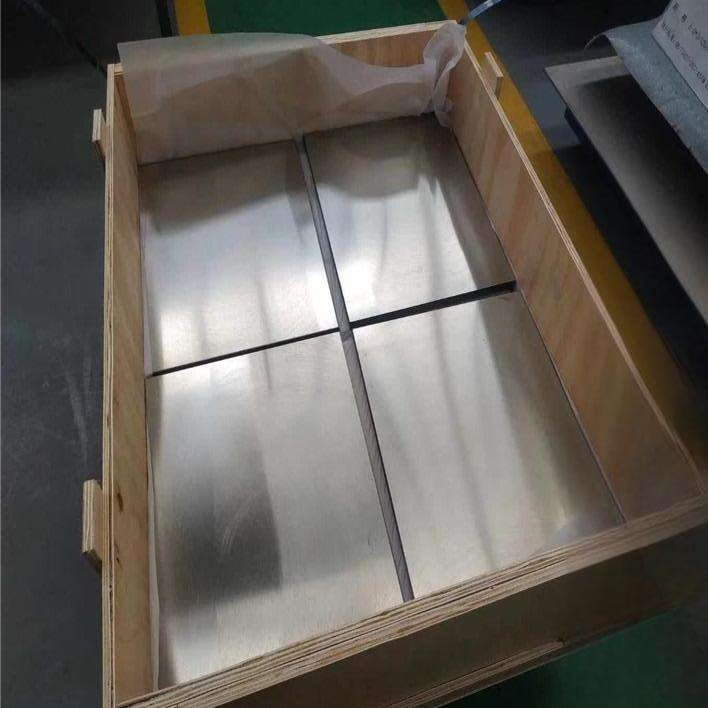
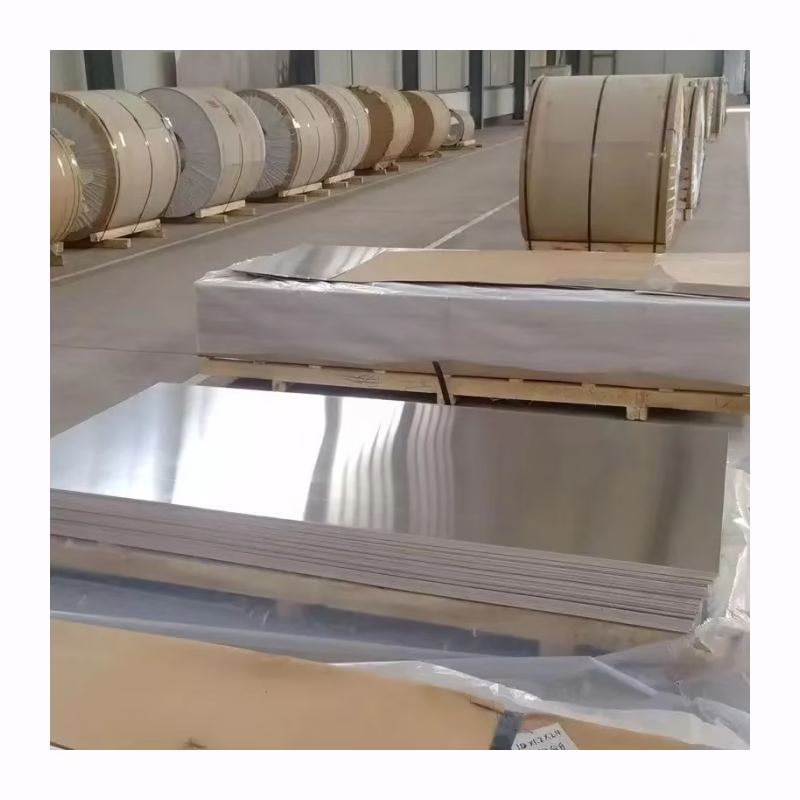
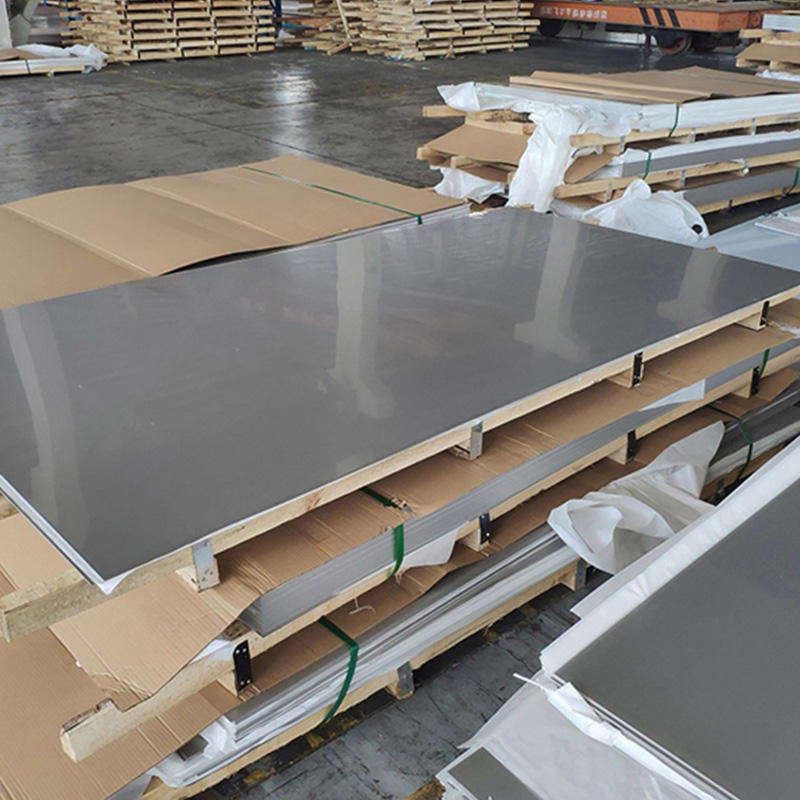
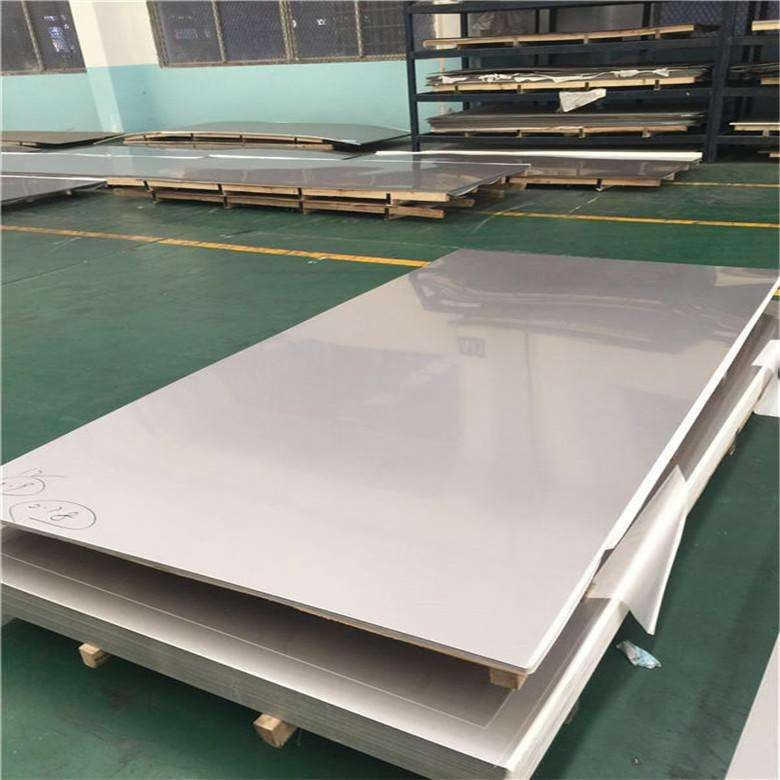
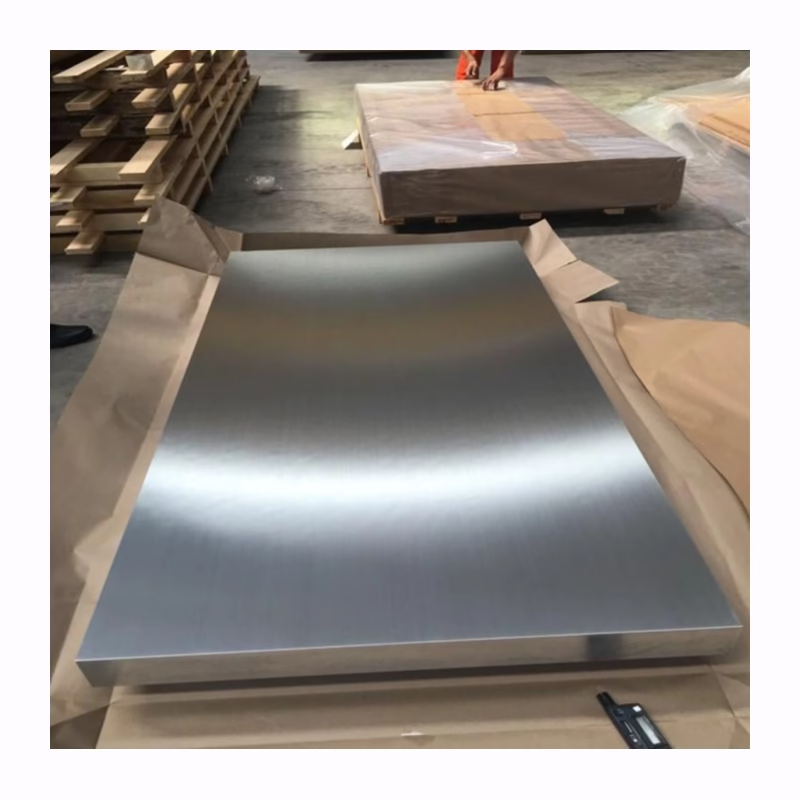
Standard: ASME SB443
Other Standard: GB, AISI, ASTM/ASME, DIN, EN, JIS
Shapes: Plates/ Sheets
Width: 0mm ~ 2500mm
Surface Treatment(Finish): Mirror, Brushed, Mill Finished, Polished, Pickling,Pickling + sandblasting
| Inconel | Density (g/cm3) | Melting point (℃) | Elongation A5 (%) | Tensile Strength (Rm N/mm2) | Yield Strength (RP0.2N/mm2) | Rockwell Hardness |
| 625 | 8.4 | 1290-1350℃ | 30 | 690 | 276 | 88-98 HRB |
| 625 | 8.4 | 1290-1350℃ | 30 | 758 | 379 | 88-98 HRB |
| 625 | 8.4 | 1290-1350℃ | 30 | 827 | 414 | 88-98 HRB |
Type: Cold finished(cold rolled), Hot finished( Hot rolled)
Thickness of Plates: 4.76mm ~ 60mm (Hot Rolled), Width: 0mm ~ 2500mm
Thickness of Sheet: 1.00mm ~ 4.76mm (Cold Rolled), Width: 0mm ~ 1500mm
Surface Treatment(Finish): Mirror, Brushed, Mill Finished, Polished, Pickling,Pickling + sandblasting
Edge:Grinding, cutting
Melting method: Vacuum Induction Melting (VIM) + Electroslag Remelting (ESR); or VIM + VAR
Inspection: TUV, SGS,
Packing: Wooden box, Waterproof polybag
Application of Inconel 625:
| Application Area | Plain English Explanation (Where is it used?) | Real-World Examples |
|---|---|---|
| Marine & Offshore | It acts as the ultimate shield against chlorine corrosion. Seawater is full of chlorides that eat through standard steel, but 625 is the go-to material for equipment that lives in the ocean. | Deep-sea cables, submarine parts, propeller blades, mooring cables, and sheathing for undersea communication lines . |
| Aerospace | It handles the intense heat and vibration of jet engines without fatigue, making it ideal for components that direct exhaust and house engine controls. | Jet engine exhaust systems, ducting, thrust reversers, fuel lines, and turbine shroud rings . |
| Chemical Processing | It withstands a wide variety of harsh acids (like sulfuric, hydrochloric, and nitric) under high temperatures and pressures, allowing for thinner, lighter, and more efficient equipment. | Reaction vessels, heat exchangers, distillation columns, valves, and piping . |
| Pollution Control & Energy | In systems that scrub toxic fumes from power plants or process waste, it resists the highly corrosive sulfur and chlorine compounds found in hot flue gases. | Flue gas desulfurization (FGD) systems, absorbers, and re-heaters in power plants . |
| Nuclear & Power Generation | Its strength and resistance to stress cracking in high-temperature water make it a trusted material for critical components in power plants. | Reactor core components, control rods, and heat exchanger tubing |
Inconel 625 is the “all-rounder” of the nickel-based superalloy family. Unlike specialized materials that excel in just one area, it masters a rare balance: from the depths of the ocean to the heat of a jet engine, it delivers high strength, extreme corrosion resistance, and excellent weldability.
Think of it as the “do-it-all superhero” that doesn’t need a complicated origin story—it’s strong right out of the gate.
Core Strengths: Why It’s a “Swiss Army Knife”
Unbeatable Corrosion Resistance (Especially Against Chlorides): This is its superpower. Thanks to its high levels of chromium and molybdenum, it resists pitting and cracking in environments that destroy ordinary stainless steel, such as seawater and hydrochloric acid. Its resistance to pitting (PREN) is more than twice that of 316L stainless steel.
Broad Temperature Range Strength: It stays strong and resists creeping (slow, gradual deformation under stress) from cryogenic temperatures to 982°C (1800°F). This means it’s just as happy in a rocket’s exhaust as it is in a deep-sea pipeline.
Built-in Weldability: It gains its strength from “solid solution strengthening” (thanks to molybdenum and niobium), not from heat treatment. This makes it naturally easy to weld and fabricate without the risk of post-weld cracking—a huge advantage in manufacturing.
Core Value
Inconel 625 is the reliable, versatile choice when you face multiple threats at once: high heat, corrosive seawater, or aggressive acids. It eliminates the guesswork in material selection, offering a single solution that is both exceptionally tough and easy to work with. Choosing 625 means investing in longevity and safety across the most demanding environments