
Standard: ASTM B670
Other Standard: GB, AISI, ASTM/ASME, DIN, EN, JIS
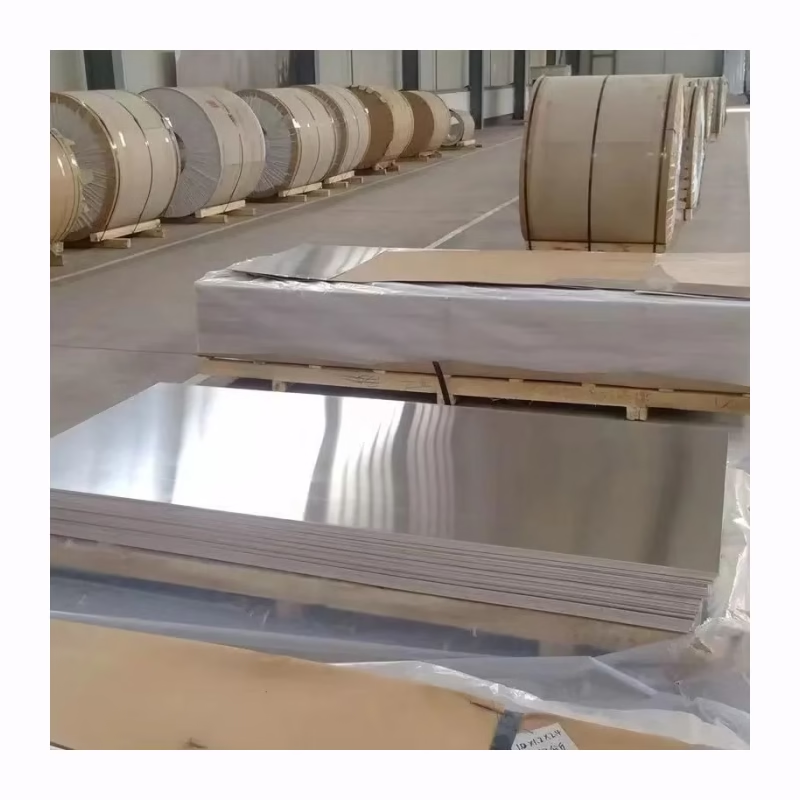
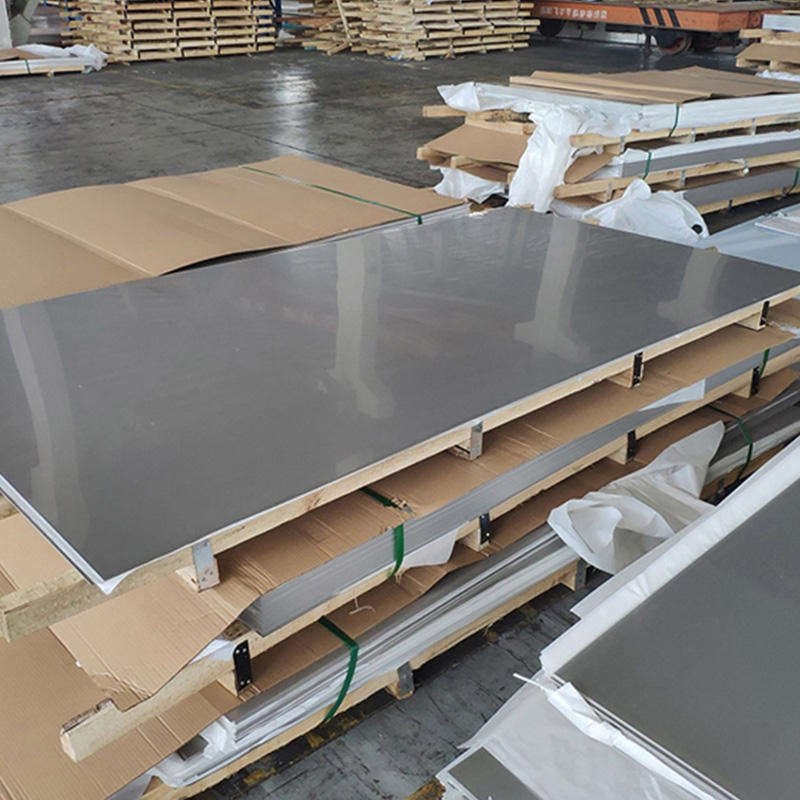
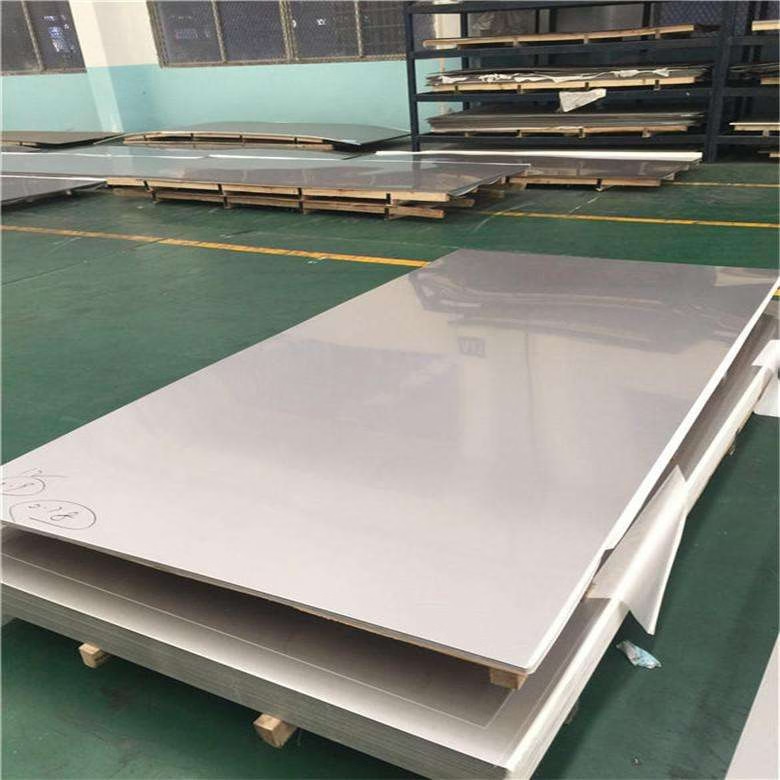
Shapes: Plates/ Sheets
Width: 0mm ~ 2500mm
Surface Treatment(Finish): Mirror, Brushed, Mill Finished, Polished, Pickling,Pickling + sandblasting
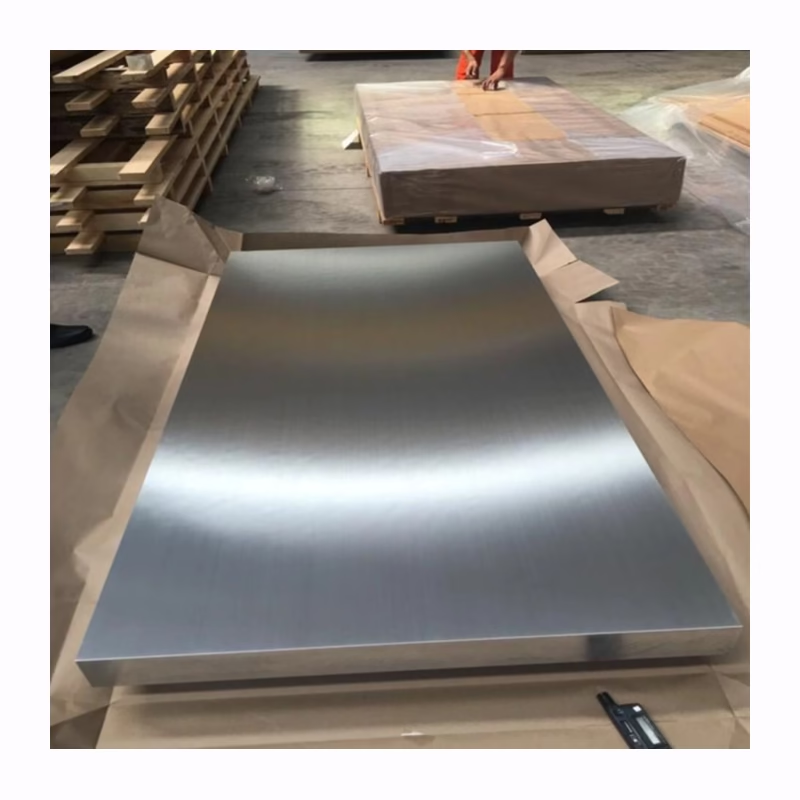
Standard: ASTM B670
Other Standard: GB, AISI, ASTM/ASME, DIN, EN, JIS
Shapes: Plates/ Sheets
Width: 0mm ~ 2500mm
Surface Treatment(Finish): Mirror, Brushed, Mill Finished, Polished, Pickling,Pickling + sandblasting
| Inconel | Density (g/cm3) | Melting point (℃) | Elongation A5 (%) | Tensile Strength (Rm N/mm2) | Yield Strength (RP0.2N/mm2) | Rockwell Hardness |
| 718 | 8.24 | 1260-1320 ℃ | 12 | 1241 | 1034 | ≥36 HRC |
| 718 | 8.24 | 1260-1320 ℃ | 10 | 1241 | 1034 | ≥36 HRC |
Type: Cold finished(cold rolled), Hot finished( Hot rolled)
Thickness of Plates: 4.76mm ~ 60mm (Hot Rolled), Width: 0mm ~ 2500mm
Thickness of Sheet: 1.00mm ~ 4.76mm (Cold Rolled), Width: 0mm ~ 1500mm
Surface Treatment(Finish): Mirror, Brushed, Mill Finished, Polished, Pickling,Pickling + sandblasting
Edge:Grinding, cutting
Melting method: Vacuum Induction Melting (VIM) + Electroslag Remelting (ESR); or VIM + VAR
Inspection: TUV, SGS,
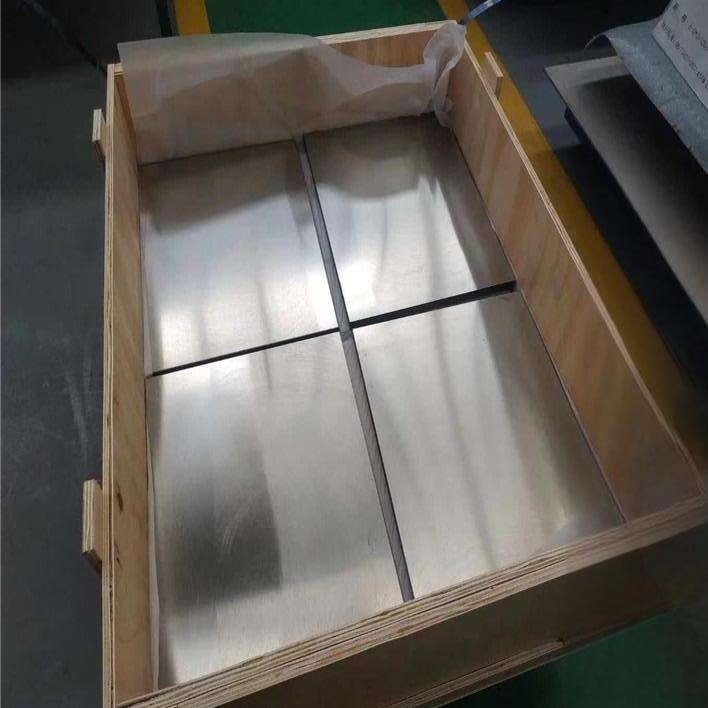
Packing: Wooden box, Waterproof polybag
Application of Inconel 718:
| Application Area | Plain English Explanation (Where is it used?) | Real-World Examples |
|---|---|---|
| Aerospace & Jet Engines | This is the single biggest user of 718. It’s used for the rotating parts inside a jet engine that spin at high speeds while being blasted with hot gas. It makes up about 50% of the materials in a conventional aircraft engine . | Turbine disks, compressor blades, casings, fasteners, bolts, and rocket motor casings . |
| Oil & Gas Extraction | It’s used deep underground and under the sea, where high pressure, corrosive hydrogen sulfide, and mechanical stress would destroy ordinary steel. | Downhole tubing, wellhead components, valves, and hangers . |
| Nuclear & Power Generation | It provides the strength and stability needed for critical components that must last for decades under high heat and radiation. | Nuclear fuel element spacers, heat exchanger tubing, and pump bodies . |
| Industrial & Tooling | It handles extreme heat in manufacturing processes, resisting deformation and thermal fatigue. | Hot extrusion tooling, die casting dies, and high-temperature fasteners . |
| Additive Manufacturing (3D Printing) | It is the go-to material for 3D printing complex metal parts because it prints well and delivers excellent mechanical properties, allowing for designs that can’t be made any other way . | Complex fuel nozzles, custom brackets, and lightweight aerospace components |
Inconel 718 is the “workhorse” of the superalloy world. It is the most widely used and trusted nickel-based alloy because it strikes the perfect balance between incredible strength, easy weldability, and cost-effectiveness.
Invented in the early 1960s, it was designed to be the reliable backbone of the jet age. Think of it as the “Iron Man suit” of materials: it’s incredibly strong, can handle extreme heat and cold, and can be fabricated into complex shapes without cracking under pressure.
Core Strengths: Why It’s the “Industry Standard”
Massive Strength (Up to 700°C / 1300°F): This is its defining feature. It maintains exceptionally high yield, tensile, and creep-rupture strength at high temperatures where other alloys would soften. Yet, it also remains tough at cryogenic temperatures .
Excellent Weldability (Its Secret Weapon): Many high-strength superalloys are a nightmare to weld—they crack. Inconel 718 was specifically formulated to resist cracking during welding, making it much easier to manufacture complex components.
Great Fatigue & Corrosion Resistance: It resists the constant vibration of jet engines and withstands corrosion in harsh chemical and marine environments.
Core Value
Inconel 718 is the reliable, go-to choice when you need a material that is exceptionally strong, welds without cracking, and won’t break the bank compared to more exotic superalloys. It’s the “safe bet” for the most demanding engineering challenges.