When people think of nickel alloys, they often focus on high-performance super alloys. Yet in many industrial applications, commercially pure nickel grades—Ni200 and Ni201—remain indispensable.
Although they are not the most complex alloys, they continue to provide reliable performance in some of the most demanding corrosive environments.
What is the Difference Between Ni200 and Ni201?
Both Ni200 and Ni201 are commercially pure nickel grades known for their excellent corrosion resistance, particularly in reducing environments and caustic alkali service.
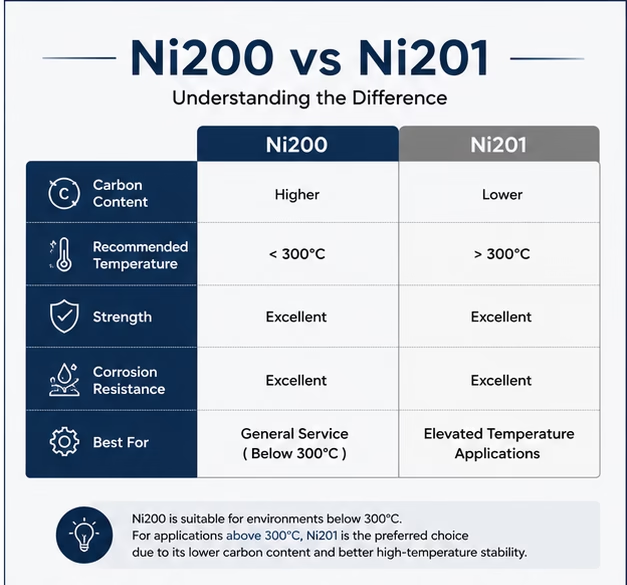
The primary difference lies in their carbon content.
Ni200 is generally recommended for service temperatures below 300°C. At higher temperatures, carbon can precipitate at grain boundaries, potentially reducing the material’s performance.
For applications operating above approximately 300°C, Ni201 is typically preferred. Its lower carbon content provides improved stability at elevated temperatures, making it the better choice for long-term high-temperature service.
Why Does Pure Nickel Offer Excellent Corrosion Resistance?
One of the greatest advantages of commercially pure nickel is its outstanding corrosion resistance across a wide range of environments.
In reducing media, pure nickel naturally exhibits excellent corrosion resistance.
In oxidizing environments, it forms a stable passive oxide film that helps protect the surface from further attack.
Its exceptional resistance to caustic alkalis remains one of the reasons why pure nickel continues to be widely used in the chemical processing industry.
Ni200 and Ni201 also demonstrate extremely low corrosion rates in both marine and rural atmospheres, with minimal loss of mechanical properties over extended service periods.
In addition, these grades can be used in hydrochloric acid solutions up to approximately 30% concentration at room temperature, where their corrosion performance remains favorable under appropriate conditions.
Typical Applications
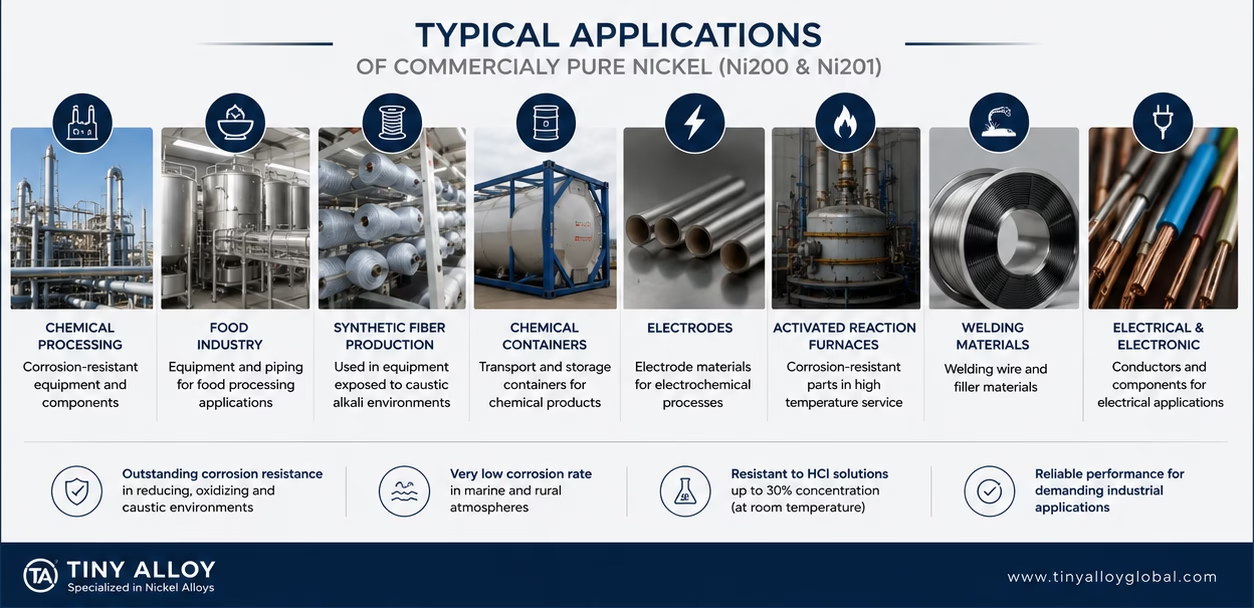
Thanks to their corrosion resistance and reliability, Ni200 and Ni201 are commonly used in:
- Chemical processing equipment
- Corrosion-resistant structural components
- Food processing equipment
- Synthetic fiber production
- Chemical transport containers
- Electrodes
- Activated reaction furnace components
- Welding wire and filler materials
- Electrical and electronic conductors
Selecting the Right Material Matters
Choosing the best material is not always about selecting the most expensive alloy.
The key is understanding the service environment and matching the material to the application.
At Tiny Alloy, we believe that sharing practical materials knowledge helps customers make better engineering decisions. Through our technical insights, we aim to support engineers and buyers in selecting nickel alloys that deliver long-term performance and value. Any question, welcome to click TINY ALLOY and leave a message!