
Standard:ASME SB168
Other Standard: GB, AISI, ASTM/ASME, DIN, EN, JIS
Shapes: Plates/ Sheets
Width: 0mm ~ 2500mm
Surface Treatment(Finish): Mirror, Brushed, Mill Finished, Polished, Pickling,Pickling + sandblasting
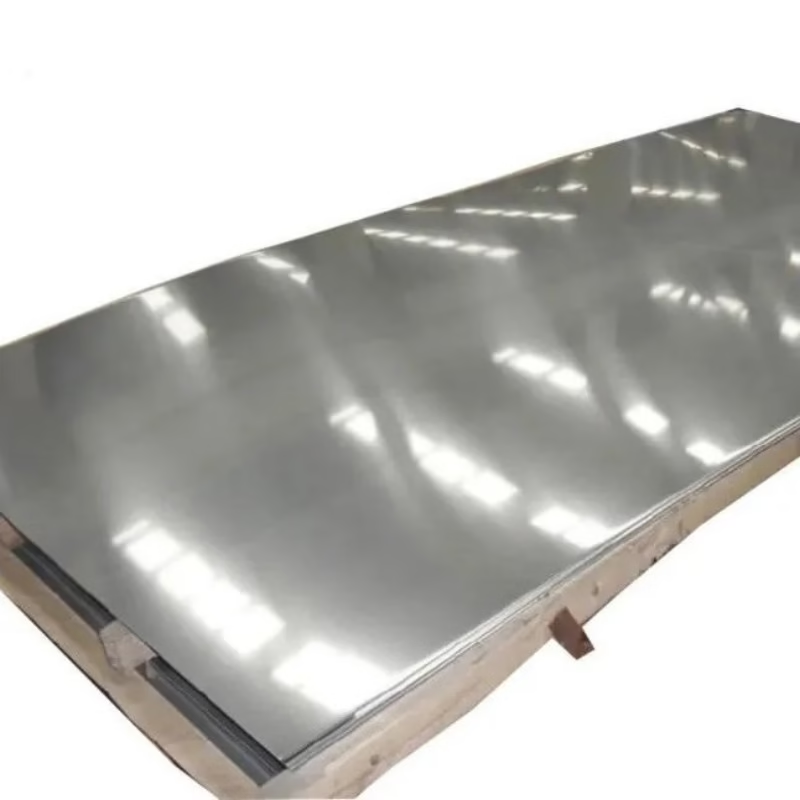
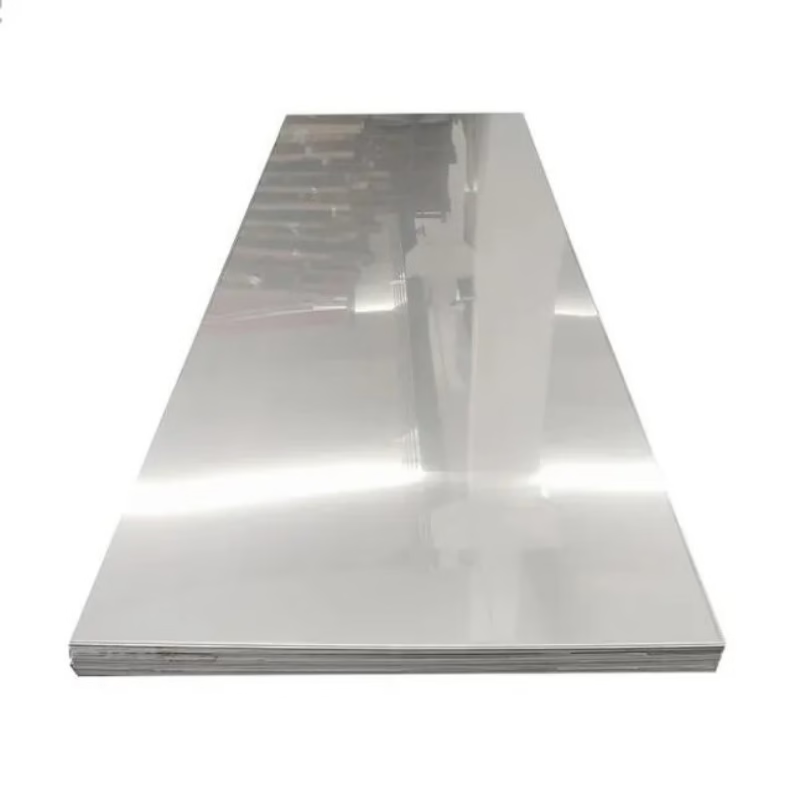
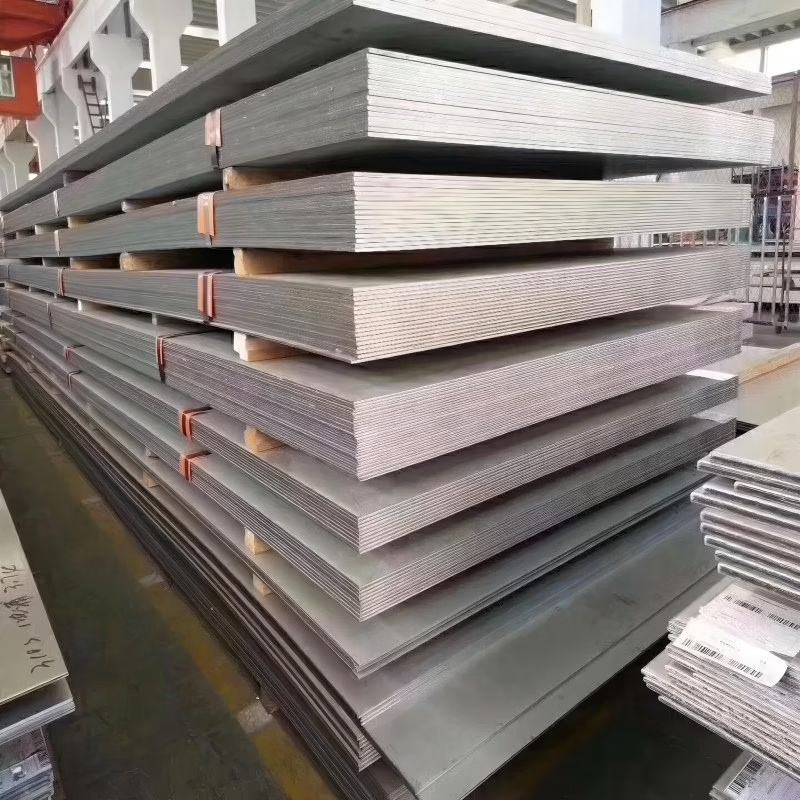
Standard:ASME SB168
Other Standard: GB, AISI, ASTM/ASME, DIN, EN, JIS
Shapes: Plates/ Sheets
Width: 0mm ~ 2500mm
Surface Treatment(Finish): Mirror, Brushed, Mill Finished, Polished, Pickling,Pickling + sandblasting
| Inconel | Density (g/cm3) | Melting point (℃) | Elongation A5 (%) | Tensile Strength (Rm N/mm2) | Yield Strength (RP0.2N/mm2) | Rockwell Hardness |
| 601 | 8.1 | 1320-1370℃ | 30 | 550 | 205 | / |
Type: Cold finished(cold rolled), Hot finished( Hot rolled)
Thickness of Plates: 4.76mm ~ 60mm (Hot Rolled), Width: 0mm ~ 2500mm
Thickness of Sheet: 1.00mm ~ 4.76mm (Cold Rolled), Width: 0mm ~ 1500mm
Surface Treatment(Finish): Mirror, Brushed, Mill Finished, Polished, Pickling,Pickling + sandblasting
Edge:Grinding, cutting
Melting method: Vacuum Induction Melting (VIM) + Electroslag Remelting (ESR); or VIM + VAR
Inspection: TUV, SGS,
Packing: Wooden box, Waterproof polybag
Core Applications of Nickel-Based Alloy 601:
Industrial Heat Treatment: Key components like high-temperature furnace rolls, trays, and radiant tubes (withstands 1100℃+ high temperatures, resists thermal cycling);
Energy & Environmental Protection: Nuclear/gas power generation equipment, waste incinerators, and flue gas treatment systems (corrosion, high temperature, and high pressure resistant);
Chemical & Petrochemical: High-temperature reactors, cracking furnace tubes, and ammonia reforming units (resists hydrogen attack, sulfide, and other severe corrosion);
Aerospace: Engine igniters, combustion chamber liners, and rocket nozzle components (withstands rapid temperature rise and air flow erosion);
Special Scenarios: Ceramic/glass kiln rollers; catalyst support parts for nitric acid production (high-temperature-resistant, without contaminating the media).
Core Value: Long-term stability in extreme temperature and corrosion environments, reducing equipment downtime and replacement costs.